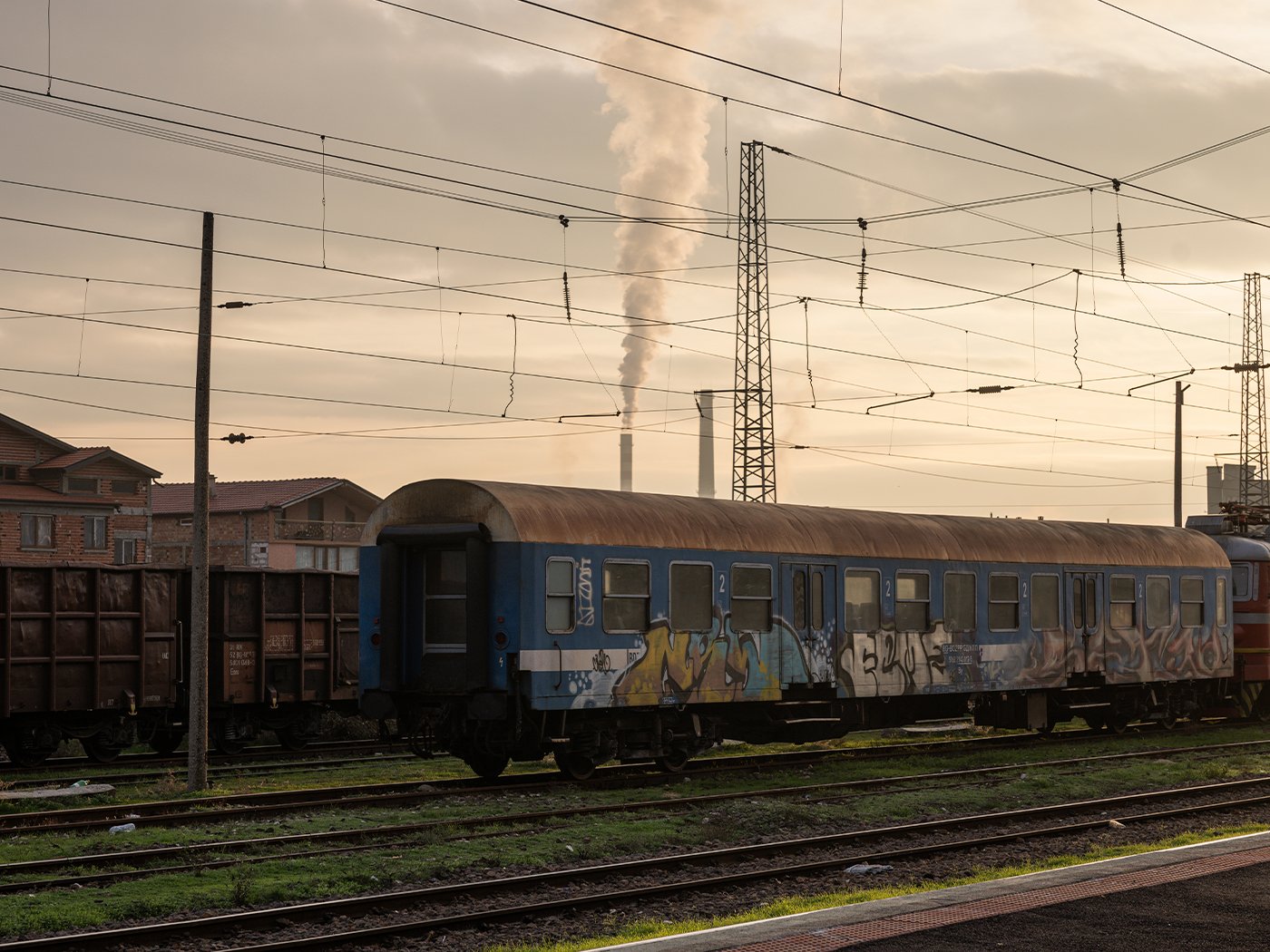
What does it mean to build a life between places? A personal reckoning with migration, identity and the politics of belonging.
For a long time, I believed that migration was a story about movement.
I thought it was about leaving one country and building a life in another. I thought it was about learning a new language, adapting to a different culture, finding work, building friendships and gradually creating a sense of home in a place that was once unfamiliar.
What I did not understand at the time was that migration is often a story about belonging, and belonging is far more complicated than geography.
Perhaps I understood this earlier than most because, as a Roma from Bulgaria, my relationship with belonging had never been entirely straightforward. I grew up in the country of my birth, speaking its language, sharing its history, participating in its society, and yet carrying the quiet awareness that many minorities know well: the feeling that your place within the national story is sometimes treated as negotiable.
This reveals itself through assumptions, stereotypes, political rhetoric, media narratives and countless small interactions. You learn that citizenship and acceptance are not always the same thing. You learn that it is possible to belong somewhere deeply while simultaneously being treated as though your belonging requires periodic justification.
When I moved abroad, I expected that feeling to intensify.
In some ways it did. In other ways it changed entirely.
One of the strangest discoveries of migration was realising that being an outsider is not always experienced in the same way. In much of Western Europe, I encountered societies that are themselves shaped by decades of migration. Tensions, prejudices, inequalities and discrimination certainly exist, but they operate differently. My ethnicity no longer carried a specific local history and a specific set of assumptions. Instead, I became part of a much larger category: immigrant.
That distinction may sound insignificant to people who have never experienced it, but for many minorities it is profound.
For the first time, I found myself in environments where people often knew nothing about Roma. They had no ready-made narrative waiting for me. They did not immediately associate me with centuries of stereotypes, political debates or social anxieties. They saw an immigrant, a student, a young professional, a woman trying to build a life, and while those labels came with their own assumptions, they were different assumptions.
Migration did not free me from categorisation but simply changed the category.
That experience forced me to confront a reality that many immigrants eventually discover. The longer you live abroad, the less your identity fits neatly into any single box.
The country you left remains part of you, but distance changes the relationship. The country where you live shapes you, but it never entirely replaces what came before. Over time, you begin to occupy a space between places. You develop loyalties, memories, habits and emotional attachments that stretch across borders. You become difficult to explain to people who believe identity should be simple.
The sociologist Abdelmalek Sayad described this condition as a form of double absence. The migrant gradually becomes separated from the place they left while never becoming fully anchored in the place where they arrive. It is one of the most accurate descriptions of migration I have ever encountered because it captures something that statistics cannot.
The longer I lived abroad, the more I realised that migration is filled with contradictions. You leave searching for opportunity yet spend years missing things you never appreciated before you left.
You return home expecting familiarity, only to discover that both you and the place have changed. You build a life elsewhere yet occasionally find yourself reminded that your origins remain visible in ways that your achievements often are not.
You become too foreign for home and too foreign for abroad.
What interests me, however, is not only the emotional dimension of this experience but also the political one. Across Europe, migration has become one of the most discussed and least understood subjects of public debate.
Immigrants appear constantly in headlines, election campaigns, policy papers and television debates. They are discussed as economic units, security concerns, demographic challenges, integration problems, labour shortages and political symbols.
What is remarkable is how often the conversation revolves around what immigrants represent rather than what they actually experience.
In many European countries, migration has become a convenient explanation for problems that long predate migration itself. Housing shortages, struggling public services, stagnant wages, declining trust in institutions and growing social fragmentation are frequently presented as consequences of immigration, even when their roots lie in decades of political decisions, economic restructuring, underinvestment and policy failures.
In Central and Eastern Europe, Roma have often occupied a similar position within public discourse. Whenever institutions fail, whenever inequality grows, whenever politicians need a distraction from deeper structural problems, attention somehow returns to the most vulnerable communities. The discussion shifts away from power and towards those with the least power to shape the conditions being discussed.
The names change, but the mechanism remains remarkably similar.
It is easier to blame the immigrant than to examine a broken housing policy. It is easier to blame the refugee than to question economic decisions that have concentrated wealth while eroding social protections. It is easier to blame Roma than to confront generations of institutional neglect, segregation and exclusion.
The most vulnerable in society rarely create its biggest problems.
They simply make convenient targets. This is why so many immigrants recognise each other even when they come from different countries, cultures and religions. There is a shared understanding that develops when you have spent years navigating systems that view you simultaneously as necessary and suspect, welcomed and questioned, included and excluded.
Only immigrants truly understand the peculiar loneliness of building a life in a place that benefits from your contribution while still debating your legitimacy.
Only immigrants understand what it means to miss a home that no longer exists in the form you remember while attempting to belong to a new one that does not yet fully claim you.
Yet there is also something valuable in this position.
Living between worlds forces a person to see contradictions that others overlook. It reveals the distance between political narratives and everyday reality. It teaches humility about identity and scepticism towards simple explanations. It demonstrates that human beings are far more complex than the categories through which societies attempt to organise them.
Perhaps that is why I have become increasingly convinced that migration is not a story about borders, but about recognition. It is about whether societies are capable of seeing people in their full complexity rather than reducing them to symbols, stereotypes or convenient political arguments.
And it is about whether we can finally accept a simple truth that millions of people live every day: that a person can belong to more than one place, carry more than one identity and still be fully at home in the world.
Adapted from an essay published on 16 June 2026.

Daniela Samiri
Contributor
The latest

The Conditional Belonging of Bulgaria’s Roma
Unregistered, Uncompensated, Unbroken

EU Budget Tracking Rules Name Roma but Still Cannot Say Whether Their Lives Improve, Roma Foundation for Europe says
Browse by category
Campaigns
Events
Facts
Press
Voices
For media inquiries:
[email protected]Sign up here so you don’t miss out on campaign updates, upcoming events and other news from the Roma Foundation for Europe and our network.
Sign up for our newsletter