As donors gather in Gdańsk for the Ukraine Recovery Conference, Roma families who stayed in their communities under fire are struggling to access compensation for war damage.
Brussels/Gdansk, 25 June 2026 ‒ As governments, international financial institutions and donors gather in Gdańsk for the Ukraine Recovery Conference this week, the Roma Foundation for Europe, a leading advocate for Roma rights, is urging decision-makers to ensure that reconstruction efforts reach all Ukrainians affected by Russia’s war, including Roma families who remain largely excluded from compensation and recovery mechanisms.
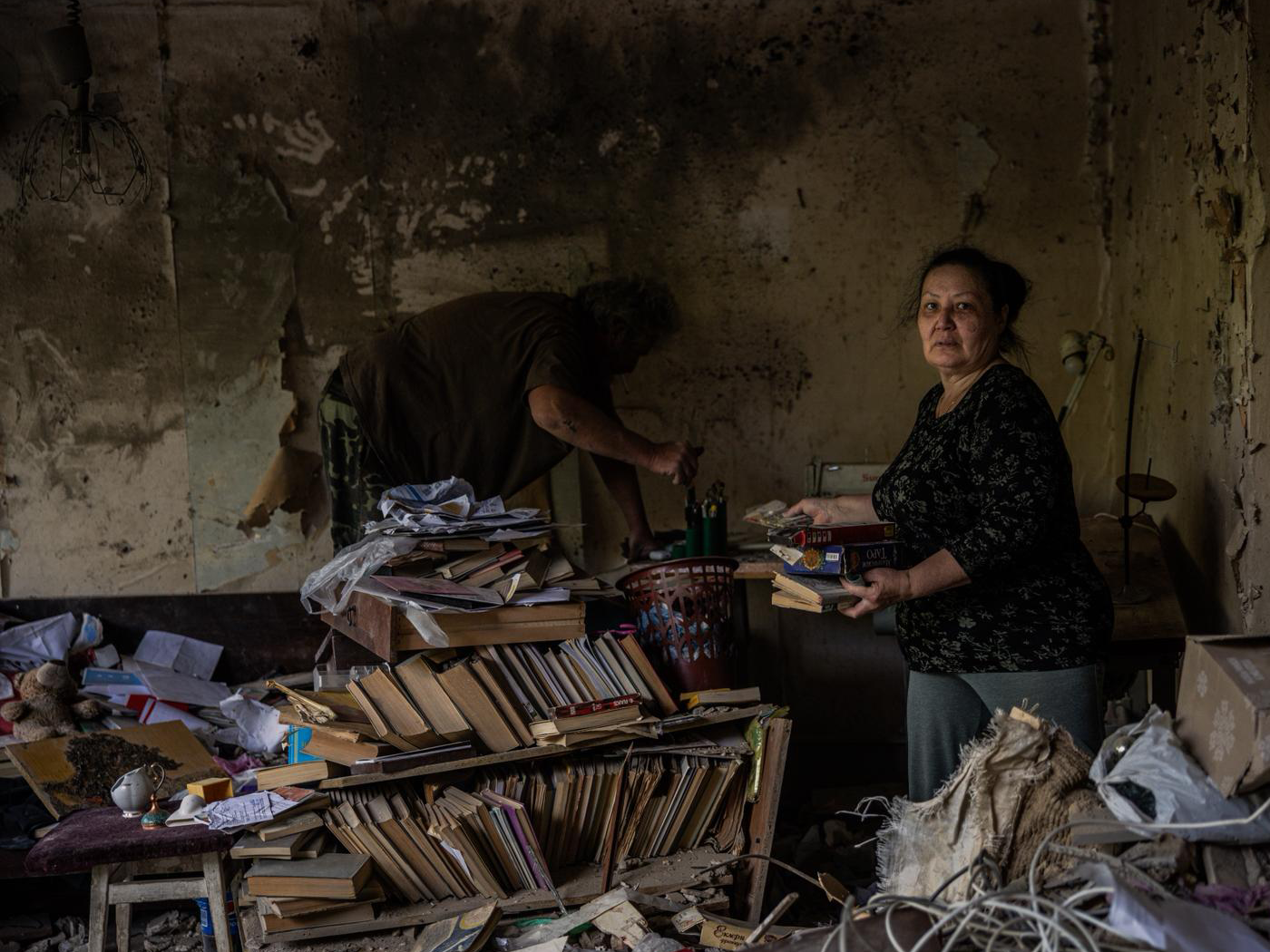
For many Roma families, defending Ukraine has meant more than military service. It has meant staying put under war-zone conditions. Despite repeated shelling, many Roma families have chosen to remain in their communities, repairing damaged homes with plastic sheeting, plywood and improvised materials while continuing to support local economies and maintain a civilian presence in areas targeted by Russian attacks.
“Russia’s strategy is not only to destroy infrastructure but to make communities unliveable,” said Neda Korunovska, vice president for analytics and results at the Roma Foundation for Europe. “Thousands of Roma families have refused to abandon their homes despite the danger. The question now is whether Ukraine’s recovery system will recognise and support those who have shown that commitment.”
A 2024 report by the foundation found that approximately one in four Roma had a family member serving in Ukraine’s armed forces, many of them volunteers despite longstanding cultural traditions against bearing arms and despite experiences of discrimination. Roma are contributing to Ukraine’s defence both on the battlefield and by maintaining communities in areas under constant threat.
However, recent research conducted by the foundation highlights significant barriers preventing Roma families from accessing compensation for war-related damage.
The study documented 103 Roma families whose homes were damaged by Russian attacks in Zaporizhzhia, Kryvyi Rih, Odesa and Kharkiv. Only four per cent had received compensation. Eighty-eight per cent had never submitted a claim, largely because they could not meet documentation requirements. Nearly half lacked the ownership documents required by the Register of Damage, while one-third of affected homes had never been entered into the state property register.
Many families were unaware of the legal requirements introduced in 2014 that required the re-registration of ownership. Others could not afford the costs associated with inheritance proceedings and notarisation, which can reach 20,000–30,000 hryvnias (€385 to €584).
Among them is the Fursenko family from Zaporizhzhia, whose home was damaged by shelling in 2024. Although repairs are estimated to cost 160,000 hryvnias (€3,200), an unresolved inheritance dispute among sixteen heirs prevents the family from accessing compensation.
“We’ve lived here for years. Our ancestors are buried nearby,” said Albina Fursenko. “But without updated documentation, we can’t claim anything.”
The Roma Foundation for Europe calls for practical reforms to ensure that recovery mechanisms are accessible to all war-affected households.
These include:
- Accepting alternative forms of proof of ownership, including technical passports, household registers, utility records and statements from local authorities.
- Waiving registration, inheritance and notary fees for households affected by war damage.
- Establishing tailored procedures for properties located in active or recently active combat zones.
- Expanding access to emergency repair support, including materials for roofs, windows and other essential repairs.
“These are not complex reforms,” said Korunovska. “Families first need to be counted. Only then can governments and donors understand the true scale of damage and the resources required for recovery.”
The foundation warns that the consequences of exclusion can be long-lasting. Following the Kosovo conflict, Roma communities experienced large-scale displacement and were often overlooked during reconstruction efforts. Ukraine now has an opportunity to demonstrate a different approach by ensuring that recovery mechanisms reach all citizens affected by the war.
As Ukraine plans for reconstruction, the challenge is not whether Roma should receive special treatment, but whether recovery systems can reach every Ukrainian whose life has been disrupted by Russia’s war.
Roma Foundation for Europe
The latest

The Conditional Belonging of Bulgaria’s Roma
Unregistered, Uncompensated, Unbroken

EU Budget Tracking Rules Name Roma but Still Cannot Say Whether Their Lives Improve, Roma Foundation for Europe says
Browse by category
Campaigns
Events
Facts
Press
Voices
For media inquiries:
[email protected]Sign up here so you don’t miss out on campaign updates, upcoming events and other news from the Roma Foundation for Europe and our network.
Sign up for our newsletter