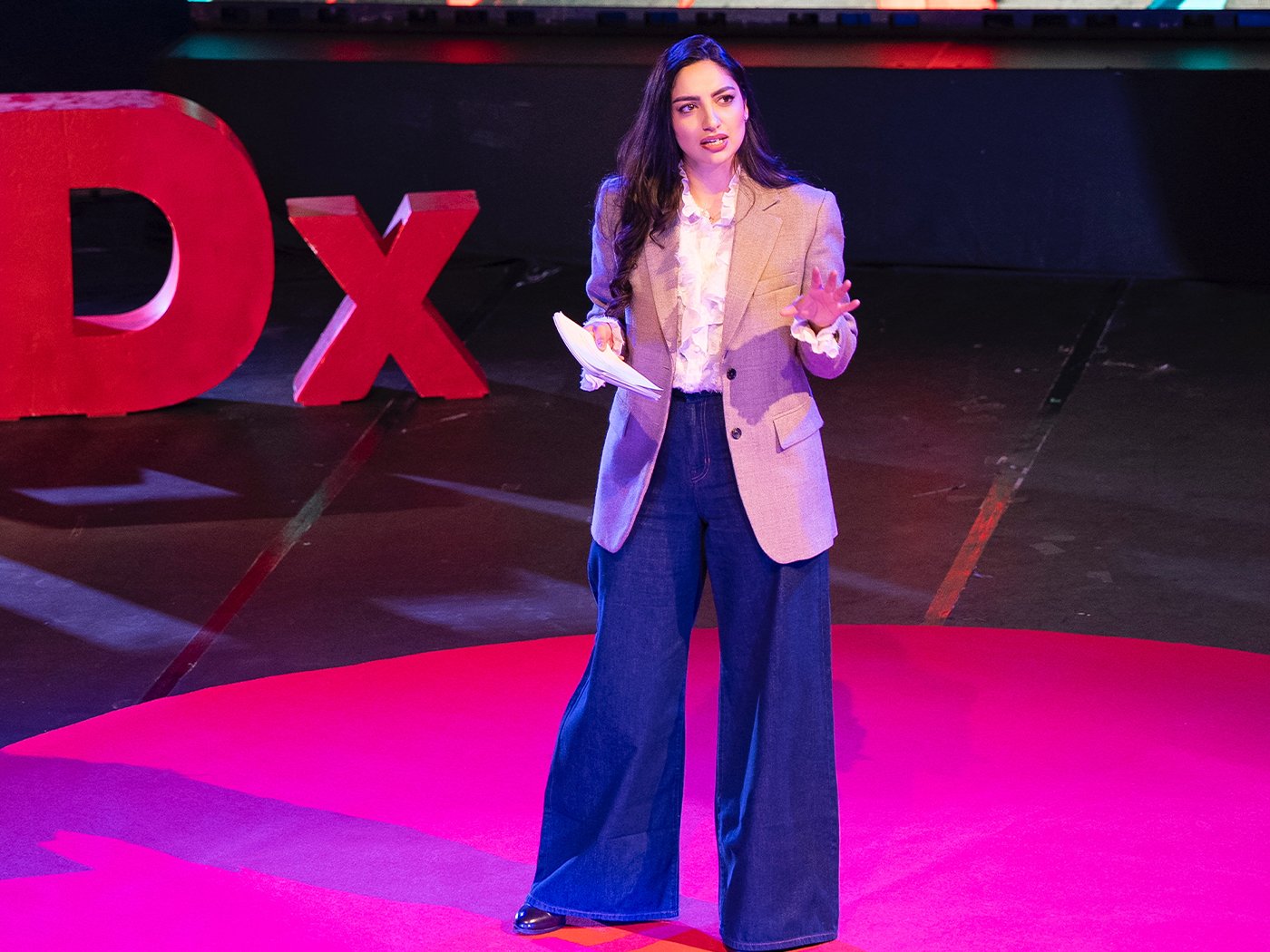
From crime headlines to election debates, Roma are often portrayed as the problem. Look more closely and a different story emerges—one shaped by structural conditions, media narratives and overlooked potential.
In public conversations in many parts of Europe, especially in the Balkans and Eastern Europe, there is a familiar sentence that often appears just before a stereotype is delivered.
“I’m not racist, but Roma steal.”
“I’m not racist, but Roma don’t want to work.”
“I’m not racist, but Roma sell their votes.”
Roma often grow up hearing versions of this sentence. It often begins politely, but by the time it ends, an entire people has been reduced to a stereotype.
The sentence performs a small moral trick. It allows the speaker to distance themselves from prejudice while repeating it. The more interesting question, however, is not the sentence itself. The real question is why certain groups become permanent suspects in society.
Many people would say the answer is politics—electoral strategy or political manipulation.
Pause for a moment and another question appears. What does the ordinary citizen actually gain from believing that an entire group is responsible for society’s problems?
Very little, except the comfort of an explanation.
From my perspective as a criminologist, this issue looks different. Criminology does not begin with blame. It begins with context.
When people talk about Roma and crime, the conversation usually focuses on the result. Criminology asks a different question. Instead of asking only “What happened?”, it asks, “Under what conditions?”
Crime rarely appears in isolation. It emerges in environments.
Looking at those environments makes the picture more complicated than stereotypes suggest.
Many Roma children begin life from a very different starting point. Far fewer attend preschool than children in the wider population. In some countries, only about half of Roma children are enrolled in early education, compared with more than 90% of other children.
This difference matters. Early education shapes cognitive development, socialisation and later academic success. When inequality begins before school even starts, the outcomes that follow often reproduce that inequality.
Entering the labour market later can also be difficult. According to data from the European Union Agency for Fundamental Rights, about 34% of Roma adults are unemployed. Among young Roma, around 56% are not in education, employment or training.
Even when Roma do find work, many remain poor. Economists call this phenomenon “the working poor”—people who participate in the labour market but remain trapped in economic insecurity.
These realities tell a very different story from the stereotypes. People are trying to build stable lives, often while facing obstacles others never see.
In public debate, the picture often looks very different.
When someone from a minority commits a crime, headlines often highlight ethnicity. When someone from the majority commits the same act, headlines usually focus on the individual.
The difference may seem small, but its effect is significant.
One headline describes a people. The other describes a person.
Over time, these small differences shape how entire communities are perceived.
A similar dynamic appears in political debates. During election cycles in several countries, a familiar accusation returns: Roma sell their votes.
Vote buying certainly exists in some contexts, and it would be dishonest to deny that. Focusing only on the individual voter, however, raises another question.
What kind of political system produces voters who must choose between democracy and dinner?
Research in psychology and neuroscience shows that people living under constant economic stress tend to prioritise short-term survival. When the mind operates under pressure, attention narrows towards immediate needs such as food, rent and safety.
Democracy assumes the opposite conditions. It assumes stability that allows citizens to think about the future, policies and long-term outcomes.
In that context, blaming voters can become easier than examining the systems that place them in survival mode.
The French philosopher René Girard described a similar dynamic when he wrote about scapegoats. Societies often stabilise themselves by directing frustration towards groups that have limited power to defend themselves. Complex structural problems become simplified moral stories.
Roma have often played this role in European history.
There is another reality that receives far less attention.
There are Roma doctors caring for patients, teachers working with children, entrepreneurs creating businesses, artists enriching culture and students preparing for their future. Many contribute to their societies every day, often quietly and without recognition.
When conversations focus only on problems, it becomes easy to overlook the potential that already exists.
This is also an economic paradox. Europe faces ageing populations, labour shortages and slowing productivity. Many sectors will require millions of additional workers in the coming decades.
At the same time, millions of Roma citizens remain excluded from full participation in the labour market.
Economic research suggests that improving Roma inclusion in education and employment could generate billions of euros annually for European economies.
Beyond the numbers lies a more fundamental point.
Europe is stronger when all its citizens can contribute fully.
There are around 12 million Roma in Europe today. Among them are teachers, doctors, engineers, entrepreneurs, artists and students already shaping the future of European societies—even if they rarely appear in public narratives.
So perhaps the question is no longer why Roma are blamed.
The more important question is what Europe might discover if it finally moved beyond the habit of blaming Roma.
This article is adapted from a talk originally delivered at TEDxVitosha on 7 March 2026.

Daniela Samiri
Contributor
The latest

The Conditional Belonging of Bulgaria’s Roma
Unregistered, Uncompensated, Unbroken

EU Budget Tracking Rules Name Roma but Still Cannot Say Whether Their Lives Improve, Roma Foundation for Europe says
Browse by category
Campaigns
Events
Facts
Press
Voices
For media inquiries:
[email protected]Sign up here so you don’t miss out on campaign updates, upcoming events and other news from the Roma Foundation for Europe and our network.
Sign up for our newsletter