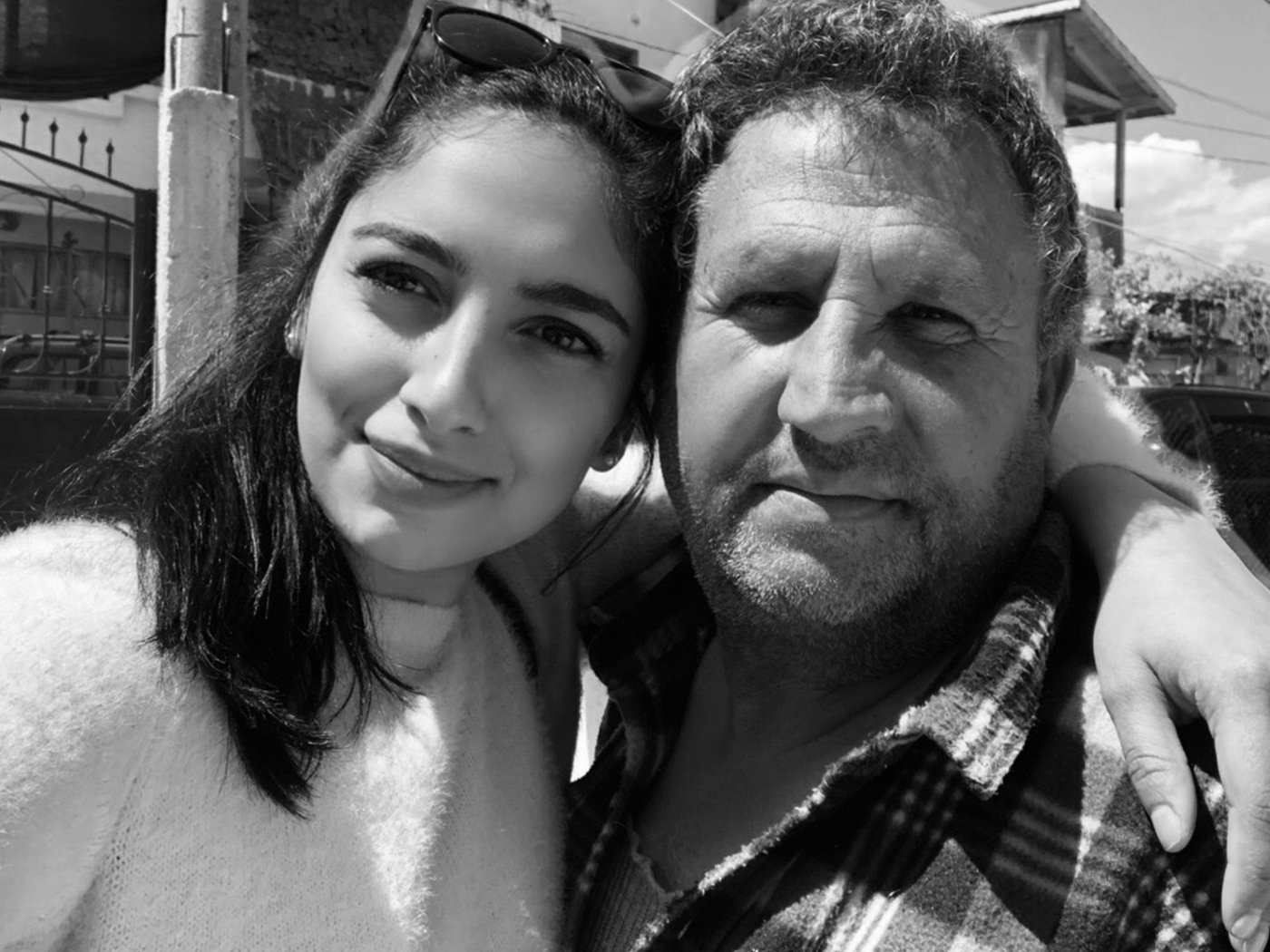
Daniela Samiri writes about the life of her grandfather, who as a boy went to work instead of school, endured humiliation quietly, and spent his whole life building for the generations that came after him.
I lost my grandfather in May, and I still struggle with the idea that someone who felt so permanent in my life can suddenly exist only through memory, photographs, stories, habits and silence.
My grandfather was my mother’s father. One of nine children raised in deep poverty in a Bulgaria that had very little softness for people like him. He never learned how to read or write, not because he lacked intelligence, but because survival came before education. His parents could not afford school, so he started working at the age of 6.
It is deeply emotional for me that my grandfather would not have been able to read the words I am writing about him now, and yet he is one of the people most responsible for who I am.
I think that says something important about sacrifice.
People often speak about progress as though it appears suddenly, as though one generation simply becomes more successful or more educated through individual ambition alone. But when I think about my own life, the rooms I now enter, the education I received, the confidence I carry moving through spaces far away from where my family began, I know those things did not appear from nowhere.
They were built slowly through the decisions, endurance and sacrifices of people like my grandfather and my mother.
And maybe that is why I keep returning to one question since his death:
How can we judge people for their choices when we know nothing about their options?
Because when I look at my grandfather’s life, I do not see someone who failed to work hard enough. I see someone whose entire life was organised around survival long before he had the freedom to imagine anything else.
He worked constantly. In fields, through pain, through exhaustion, through humiliation. I heard stories about the way he was sometimes treated at work; the kinds of insults and disrespect poor Roma men often had to absorb quietly because refusing meant risking the little stability they had. And still, he continued, because his children needed food, because his family needed a home, because responsibility does not pause when dignity is wounded.
That is one reason I struggle so deeply with the modern obsession with meritocracy, especially in spaces where people speak about hard work as though it exists under equal conditions. Recently, I was at the Brussels Art Expo, standing in beautiful rooms surrounded by polished conversations about ambition, creativity, investments, opportunity, possibility. Then, only days later, I was back beside my grandfather.
The psychological distance between those worlds is difficult to explain unless you have lived it.
And it is not because I ever felt ashamed, but because I became aware of how much of what people call “confidence” is often inherited through generations of stability, security and education.
My grandfather and my mother did not have those inheritances.
What they had were small, difficult choices made under pressure, and somehow those choices created enough stability for me to move through the world differently. They created the possibility for me to enter rooms where they would probably never feel fully comfortable.
And that reality follows me constantly.
Because every time I return home, I am reminded that there are still so many people surviving rather than living. People whose lives are still shaped by instability, poverty, exclusion and physical exhaustion.
My grandfather was one of those people.
He was not an expressive man. Outside the family, people feared him sometimes. He carried a roughness to him, the kind older Balkan men often carry when life demanded strength from them too early and for too long. But inside the family, he was deeply observant, patient and protective.
He believed in me long before I understood myself.
And what hurts me most now is not some dramatic memory, but ordinary things.
The way he listened quietly while everyone else spoke. The way he watched people carefully. The way he encouraged me without ever making it feel performative. And one thing I have not stopped thinking about since he passed away is the way he always ate last.
Always.
Even when there was enough food.
He would wait for everyone else to finish first. Sometimes he would not even sit with us at the table. And if my sister or I left food unfinished, he would quietly eat the leftovers instead of taking another plate for himself.
As a child, I found it strange. Now I understand that some people survive poverty financially but never psychologically. Somewhere inside my grandfather, there was always the little boy who learned too early that food disappears.
He worked harder than many people romanticising hard work from comfortable offices, networking events and social media posts about discipline and success. Yet hard work did not make him rich. It damaged his body. It exhausted him. It shortened his life.
What it did create was something quieter but perhaps far more meaningful.
His children survived. His grandchildren received education.
A man who could not read still helped create granddaughters who could.
And I think there is something profoundly dignified in that.
There are thousands of men like my grandfather in Bulgaria, in Roma communities, across the Balkans generally. Men whose bodies absorbed the cost of survival so the next generation could stand slightly further forward.
That is one of the reasons I care so deeply about the work I want to do in my own life. Because people like my grandfather are too often discussed statistically, politically, superficially or through stereotypes, while the human reality of what their lives required remains invisible.
Near the end of his life, I remember sitting beside my grandfather and feeling something I still cannot fully explain.
Not only grief, but also a perspective. Because when you love someone deeply, especially someone whose entire life was built around survival, you eventually begin to understand that many of the things you once considered ordinary were never ordinary at all.
The tiredness you ignored. The silence.
The way they carried responsibility so naturally that nobody stopped to ask what it was costing them.
I think about my grandfather now and realise that almost everything beautiful my family has today came from people like him repeating difficult things every single day without the luxury of collapsing.
There was nothing glamorous about his life.
No inspiring speeches. No recognition.
Just work, sacrifice, routine, responsibility and love expressed through endurance.
And somehow, despite all the hardship life gave him, he remained the type of man who made the people around him feel protected.
A few days before he passed away, I told him that I was proud that he was my Papu.
I do not think I will ever stop feeling that.
Because the older I get, the more I realise that people like my grandfather carried entire generations forward quietly, often without understanding what they were creating beyond survival itself.
And maybe that is what moves me most when I think about my Papu now. Not only the life he lived, but the possibilities his life quietly created for others.
Because some people spend their entire existence building bridges they will never personally get to cross.
And still, they build them anyway.
Adapted from an essay published on 6 May 2026.

Daniela Samiri
Contributor
The latest
The Conditional Belonging of Bulgaria’s Roma
Unregistered, Uncompensated, Unbroken

EU Budget Tracking Rules Name Roma but Still Cannot Say Whether Their Lives Improve, Roma Foundation for Europe says
Browse by category
Campaigns
Events
Facts
Press
Voices
For media inquiries:
[email protected]Sign up here so you don’t miss out on campaign updates, upcoming events and other news from the Roma Foundation for Europe and our network.
Sign up for our newsletter