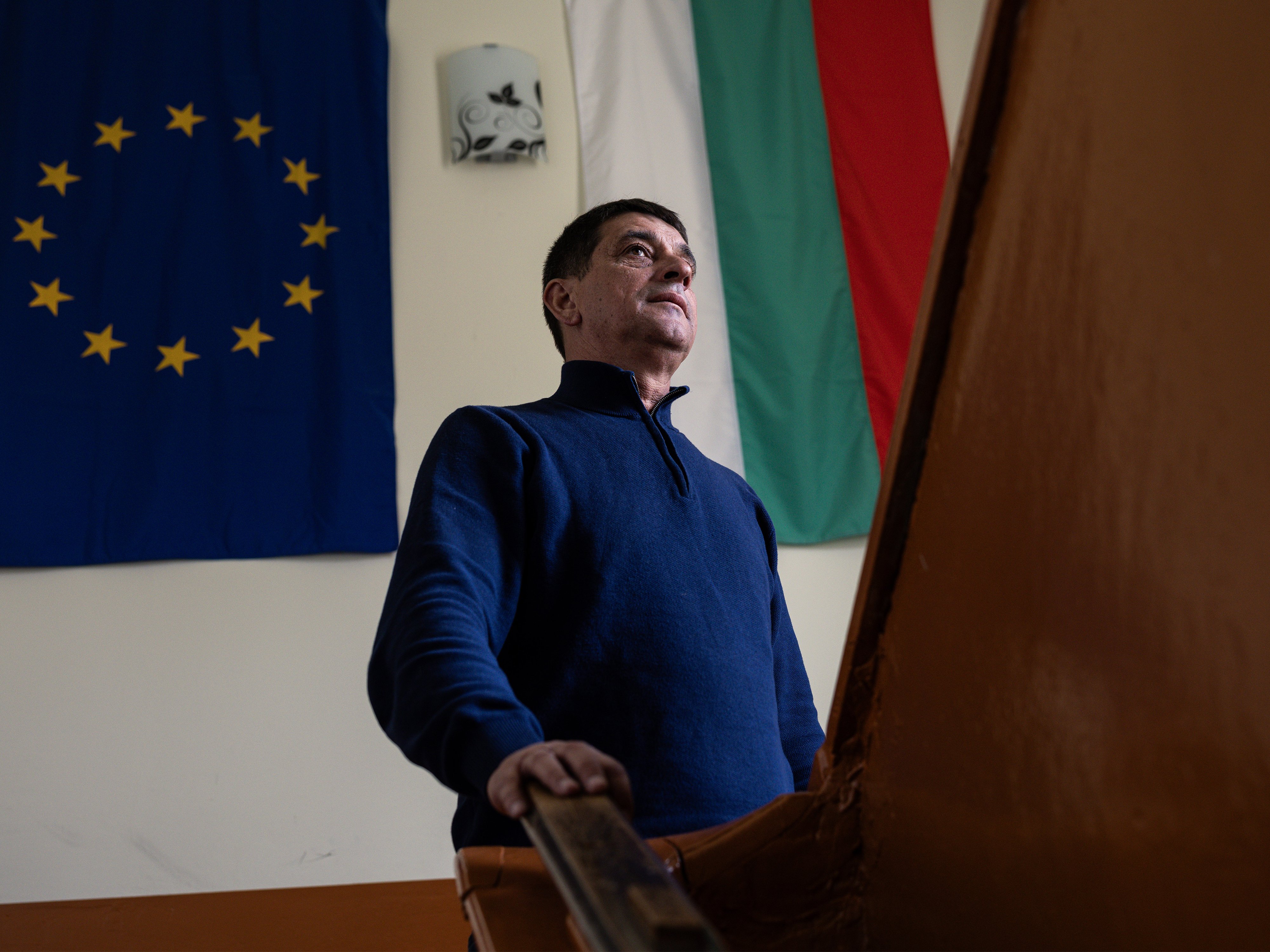
Eight elections in five years left Bulgarians exhausted—and exhaustion, it turns out, is a political force. The April vote reveals what outsiders keep getting wrong about Bulgaria, and why it matters for Europe.
By the time Bulgarians entered polling stations on 19 April, the vote had already been emotionally decided. It wasn’t about ideologies, political programmes, the geopolitical divide between East and West, clientelist interests, group identities—not even about a charismatic, anti-establishment leader.
It was about exhaustion.
This is what much outside commentary overlooks. As a Bulgarian, it’s frustrating to hear Bulgaria constantly explained through frameworks that flatten its reality. It’s too often reduced to lazy binaries: European or Russian, liberal or nationalist. Too many European analysts still view Bulgaria through the polished comfort of policy panels, mistaking elite discourse for national reality.
They overlook pensioners, villages, shrinking towns, working families and generations who have lived through socialism, collapse, transition, corruption and emigration. These people are not voting based on debates happening in Brussels or Sofia’s downtown cafes. They are voting based on whether their own lives feel under control.
Democratic Agony
Bulgaria has elections, parties and democratic vocabulary, but for many citizens, especially outside urban political bubbles, democracy after 1989 felt like anything but liberation. They lived through privatisation shocks, corruption, inequality and decades of mistrust. Despite all these problems, though, the status quo at least looked stable.
But then the political agony started when new anti-corruption forces, led by the liberal We Continue the Change – Democratic Bulgaria (PP‒DB), shook up the political scene. At the same time, eight elections in five years didn’t feel like democratic vitality to much of the country. It was insecurity without resolution. Political candidates and short-lived governments came promising to make reforms, fight corruption or break with the past—then fell back into compromise, paralysis or repetition. Voters have been mired in intolerable, exhausting instability.
The first consequence was a decline in voter turnout until voters got fed up. People stopped listening to promises and began measuring politics by consequences. For millions of Bulgarians, politics is not primarily experienced through party programmes but through pensions, electricity bills, healthcare access and the absence of their children who emigrated—that experience is far more meaningful than any political narrative.
Democracy remained the preferred governing system, but many Bulgarians’ faith in the system’s ability to provide stability gradually eroded. The April elections showed that people don’t automatically abandon democracy when they become exhausted. They begin gravitating toward figures who appear capable of restoring coherence to everyday life, institutions and the state itself.
Liberal Incoherence
This is also why pro-European liberal parties’ incoherence mattered. For example, PP–DB positioned itself as democratic, reformist and pro-European. In these elections, they were the only ones who promoted symbolic minority representation, including a Roma candidate on their list.
But their behaviour exposed a deeper contradiction in the way they understood voters. On election day, PP–DB published a video on its social media channels showing poor and minority voters, including people unable to speak Bulgarian fluently, presenting them less as citizens with political agency and more as visual evidence of a broken electoral culture. The message implicitly framed these communities not as participants in democracy, but as proof of its corruption, manipulation and backwardness.
For a party presenting itself as morally distinct from nationalist or exclusionary politics, this was a striking contradiction. And it was not the first. A much starker one was when the PP‒DB-led government of 2023‒24 decided to deploy uniformed police officers in Roma neighbourhoods under the justification of preventing vote buying. Preventing electoral manipulation is necessary; the problem was PP‒DB framing voters from vulnerable communities not as deserving protection, but as the face of electoral fraud.
The contradiction between PP–DB's stated values and its actions was not abstract—it had consequences among Roma voters. The loss of credibility was reflected in the vote. Despite being one of the only major political formations to promote Roma political representation, PP–DB received only around 5.2 per cent support at Roma-majority polling stations. Meanwhile, Rumen Radev’s Progressive Bulgaria (PB) received almost the same level of support among Roma voters (45.2 per cent) as it did nationally (44.7 per cent), suggesting that many Roma voters, like much of the broader electorate, responded less to symbolic representation and more to the wider mood of exhaustion, distrust and a longing for stability.
Rumen Radev’s Order
Radev didn’t win because Bulgarians suddenly embraced a detailed political programme. In fact, throughout much of the campaign, he remained deliberately vague on policy specifics. His appeal operated less through ideology and more through political psychology. His military background reinforced the image of discipline, restraint and control. His presidential image and measured tone mattered.
But he was neither a charismatic populist nor an anti-establishment outsider promising revolution. His advantage was different. In a society exhausted by instability, he projected seriousness, coherence and the impression that, under him, the state could regain authority.
Above all, he won because he represented what many felt had been missing. For many voters, especially older generations shaped by communism, collapse and painful transition, he projected something psychologically potent: not necessarily salvation, but order. In a country tired of fragmentation, scandal and political improvisation, people become more responsive to the performance of stability than the promise of a bright future.
Rumen Radev’s victory says more about Bulgaria’s exhaustion than it does about the country’s political aspirations. But it isn’t only a national story. It’s also a warning to Europe: continue to misunderstand what political fatigue does to democratic behaviour, and Bulgaria won’t be the last place where exhaustion reshapes the vote.

Daniela Samiri
Contributor
The latest

The Conditional Belonging of Bulgaria’s Roma
Unregistered, Uncompensated, Unbroken

EU Budget Tracking Rules Name Roma but Still Cannot Say Whether Their Lives Improve, Roma Foundation for Europe says
Browse by category
Campaigns
Events
Facts
Press
Voices
For media inquiries:
[email protected]Sign up here so you don’t miss out on campaign updates, upcoming events and other news from the Roma Foundation for Europe and our network.
Sign up for our newsletter