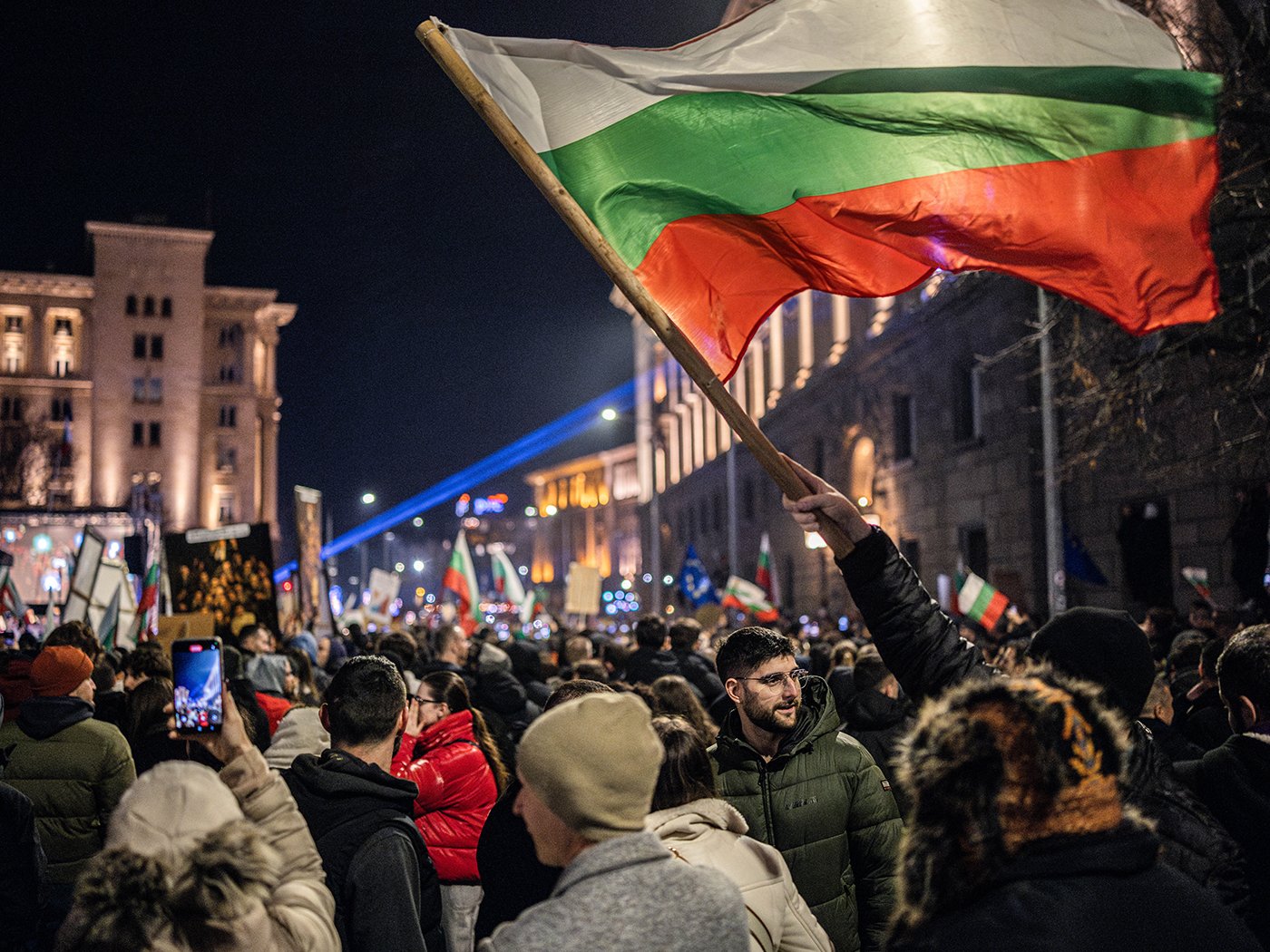
Bulgaria must choose democratic renewal over democratic pretence as it enters another election cycle following President Rumen Radev’s decision to step down.
Without clear, institutional reforms that restore democratic accountability and political inclusion, another election risks deepening the country’s political crisis rather than resolving it.
The emergence of a possible new political party led by Radev risks becoming an empty promise if it is not matched by concrete democratic change. Calls for fair elections and democratic, free development ring hollow when paired with rhetoric that echoes anti-EU positions, pro-Kremlin narratives and the illiberal playbook seen elsewhere in Europe.
“Roma have heard promises about democracy many times before,” said Mensur Haliti, Vice President for Democracy at the Roma Foundation for Europe. “What matters is not the language of fairness, but whether political leaders are willing to dismantle a system that systematically excludes entire segments of the population from real power.”
This moment does not represent a break with Bulgaria’s political status quo. It reflects its continuation. For those protesting in the streets, the question is whether they are being offered a genuine new option, or simply a different face of the same political order they are rejecting. For years, the country has maintained a facade of EU democracy while entrenched oligarchic interests and Kremlin-aligned ideas have shaped political life.
Roma experience this reality first-hand. They account for roughly ten percent of Bulgaria’s population, yet there are currently zero Roma members of parliament. At the same time, Bulgaria has held seven parliamentary elections in four years without producing durable governance or expanding political representation. This is structural exclusion, not political apathy.
“Bulgaria’s political system was designed to extract Roma participation to legitimise elections, while ensuring that this participation never translates into representation, decision-making power or accountability, and it has worked exactly as intended,” said Mensur Haliti. “What we are seeing now is that the same logic has been generalised across society, consolidating a system that blocks democratic correction rather than enabling it.”
That exclusion carries real economic and social consequences. Bulgaria’s Roma population is estimated at up to 750,000, yet only 47 per cent are in employment, compared to 73 per cent of the general population. Among Roma youth aged 16 to 24, 54 per cent are not in education, employment, or training. At a time when Bulgaria’s workforce is projected to shrink by more than 30 per cent by 2050, excluding a young and growing population from political and economic participation is not only unjust, it is unsustainable.
Stability built on exclusion and democratic shortcuts is not a solution to Bulgaria’s political crisis. A genuine way out requires confronting political exclusion directly. This includes enforcing electoral rules in areas where vote-buying and intimidation persist, acting decisively against racism against Roma in political campaigning and creating real pathways for Roma participation in decision-making at local and national level.
Any future president or leading political party must be judged on concrete commitments. These include guaranteeing free and fair elections in practice, not only in law; regulating hate-based and disinformation-driven campaigning; ensuring independent oversight of electoral abuses; and ending the permanent absence of Roma voices from political institutions.
“Bulgaria is facing a battle for its future,” Haliti said. “That battle is not only about geopolitical alignment or party leadership. It is about whether democracy remains a living system that corrects itself, or an empty ritual that protects entrenched interests.”
Securing a prosperous future for Bulgaria means choosing an open, European path rooted in the rule of law, political inclusion and equal citizenship. Without that shift, no new party, no new election and no new president will resolve the crisis.
Roma Foundation for Europe
The latest

The Conditional Belonging of Bulgaria’s Roma
Unregistered, Uncompensated, Unbroken

EU Budget Tracking Rules Name Roma but Still Cannot Say Whether Their Lives Improve, Roma Foundation for Europe says
Browse by category
Campaigns
Events
Facts
Press
Voices
For media inquiries:
[email protected]Sign up here so you don’t miss out on campaign updates, upcoming events and other news from the Roma Foundation for Europe and our network.
Sign up for our newsletter